xingqisi 写了: 2026年 7月 18日 14:28谁先谈智商的?
你回去再仔细阅读相关帖子,看看你理解能力是不是幼儿园水平
你不是智商低下是什么
扯什么新闻联播,老子看新闻联播的次数估计没超过二十次
你除了会意淫别人信这个信那个你还会啥
你的假设有没有经过检验?
你的论述有没有逻辑?
就这,和我谈智商?
能和哥谈智商的人不多,可以肯定你肯定不属于
哥读了你的原帖,对于你叙述的你爷爷的故事
真实性,哥认为与新闻联播一样,要存疑。
这就是智商的展现。
xingqisi 写了: 2026年 7月 18日 14:28谁先谈智商的?
你回去再仔细阅读相关帖子,看看你理解能力是不是幼儿园水平
你不是智商低下是什么
扯什么新闻联播,老子看新闻联播的次数估计没超过二十次
你除了会意淫别人信这个信那个你还会啥
你的假设有没有经过检验?
你的论述有没有逻辑?
就这,和我谈智商?
能和哥谈智商的人不多,可以肯定你肯定不属于
哥读了你的原帖,对于你叙述的你爷爷的故事
真实性,哥认为与新闻联播一样,要存疑。
这就是智商的展现。
Yellen 写了: 2026年 7月 18日 14:27俺祖父祖母都随国民政府先撤到武汉再撤到重庆。到了武汉那段时间不知怎么有时间,还去庐山玩了一次。俺祖母说上庐山时是夜晚,大家一群人都打着火把。后来在重庆也就轰炸比较可怕,有次在防空洞,炸弹丢得很近,感到震动,而且防空洞一个出口被炸塌,幸好防空洞都有多个出口。
好像是42年以后飞虎队中美联合空军就占优势了,再也没有轰炸了,白天工作晚上照样开灯打麻将。国民党确实腐败,即使战争期间贪污也层出不穷。
俺家有不少当年美军物资,有羊毛毯子,铜柄的小刀,开罐头器等,质量真是好,当时都是从军需店买的新的,用到80年代还能用。
对了,俺祖母说她认识冯玉祥,当年还是有舞会等活动(延安也有)。大家都穿毛呢军服,就这个家伙是个一级上将还天天穿个土布军服,其实也贪了不少钱,就是会装叉。这是俺祖母说的,虽然她不会用装叉这个词。
祖上阔过,呵呵
天天穿个土布军服,这就不容易
再说一点儿我老家人说的,我们村在一个小山沟,下面有另一个山沟,当日本兵来时,他们没走我们这边的山沟,那个沟的地方村里人设了一个小庙,日本兵选了另外一个,他们经过的村子都给烧了,我们村幸免。另外一个村有保安团,类似的名字,就是当地组织的保安组织,日本人来了把他们锁一个屋子里,点火烧死,只有一个爬炕洞里幸免。后来还有10来日本兵过来了,当时应该八路军和我们当地的设了伏击圈,把这几个都给灭了,然后把他们炼了油,据说治身上那个的疮治疗效果很好。处理他们的地方,叫乱坟滩,白天从那地方走,都挺吓人你的。
别以为日本人跟论坛上的某些人一样傻,都不知道被谁歼灭的,几个日本兵出去被砍死了找不到真凶,大部队交火还能不知道对方是谁?日本人那么啥啦?
Yes, Japanese military archives and historians know which Chinese forces were responsible for casualties, though this distinction is less recognized by the general public in Japan. [1, 2, 3, 4]Detailed Historical RecordsDuring World War II, the Imperial Japanese Army kept highly detailed operational logs, casualty reports, and intelligence records. Because the Chinese Nationalists (Guomindang/KMT) and the Chinese Communists (the Eighth Route Army and New Fourth Army) used different tactics and operated in different regions, Japanese military intelligence distinguished between them. [1, 2, 3, 4, 5]The Nationalists fought mostly conventional, large-scale battles. Japanese records extensively document these pitched battles, along with the specific Nationalist divisions involved. [1]The Communists engaged in guerrilla warfare in Japanese-occupied areas. Japanese records categorize these clashes as "pacification campaigns" or counter-insurgency operations against Communist-led bases. [1, 2, 3]Academic vs. Public KnowledgeWhile the information exists in historical archives (such as those at the National Institute for Defense Studies in Japan and the Yasukuni Shrine), public awareness varies: [1, 2, 3]Academic/Historical Researchers: Japanese historians have done extensive research on the Second Sino-Japanese War. They know exactly which factions, battles, and units were involved in specific Japanese casualties. [1]The General Public: In popular Japanese media and general public school textbooks, the history of the war in China is often taught in broad strokes. The nuanced distinction between the KMT and the Communist forces (Balujun) is rarely emphasized, with more public focus generally directed toward the Pacific War against the Allies. [1, 2]
日本人不会精确区分统计被国军和共军各消灭多少人。就像中国当年和越南打仗,中国会精确区分自己被越南正规军和游击队各打死多少人吗?只会统计一个总数而已。
DIYer 写了: 2026年 7月 19日 12:29别以为日本人跟论坛上的某些人一样傻,都不知道被谁歼灭的,几个日本兵出去被砍死了找不到真凶,大部队交火还能不知道对方是谁?日本人那么啥啦?
Yes, Japanese military archives and historians know which Chinese forces were responsible for casualties, though this distinction is less recognized by the general public in Japan. [1, 2, 3, 4]Detailed Historical RecordsDuring World War II, the Imperial Japanese Army kept highly detailed operational logs, casualty reports, and intelligence records. Because the Chinese Nationalists (Guomindang/KMT) and the Chinese Communists (the Eighth Route Army and New Fourth Army) used different tactics and operated in different regions, Japanese military intelligence distinguished between them. [1, 2, 3, 4, 5]The Nationalists fought mostly conventional, large-scale battles. Japanese records extensively document these pitched battles, along with the specific Nationalist divisions involved. [1]The Communists engaged in guerrilla warfare in Japanese-occupied areas. Japanese records categorize these clashes as "pacification campaigns" or counter-insurgency operations against Communist-led bases. [1, 2, 3]Academic vs. Public KnowledgeWhile the information exists in historical archives (such as those at the National Institute for Defense Studies in Japan and the Yasukuni Shrine), public awareness varies: [1, 2, 3]Academic/Historical Researchers: Japanese historians have done extensive research on the Second Sino-Japanese War. They know exactly which factions, battles, and units were involved in specific Japanese casualties. [1]The General Public: In popular Japanese media and general public school textbooks, the history of the war in China is often taught in broad strokes. The nuanced distinction between the KMT and the Communist forces (Balujun) is rarely emphasized, with more public focus generally directed toward the Pacific War against the Allies. [1, 2]
mjridgway 写了: 2026年 7月 20日 09:42日本人不会精确区分统计被国军和共军各消灭多少人。就像中国当年和越南打仗,中国会精确区分自己被越南正规军和游击队各打死多少人吗?只会统计一个总数而已。
别乱扯,区分就是区分,精不精确是另一回事。
就像我说的,几个日本兵外出被砍死了,可能不知道真凶,但是打大仗你不能说不知道敌人是谁吧?
你成天以自己的认知造谣日本当年的行为目的是什么?
而且,日本是记录被共产党或国民党歼灭人数的。看下面文献:
Here is how the Japanese military differentiated between the two forces:1. Conventional Warfare (KMT) vs. Guerrilla Warfare (CCP)The Nationalist Army (KMT): Led by Chiang Kai-shek, the KMT military fought the bulk of the large-scale, conventional battles against Japan (such as the Battle of Shanghai and the defense of Wuhan). The Japanese treated these engagements as traditional, frontline military conflicts involving artillery, infantry divisions, and established defensive lines. [1, 2, 3, 4]The Communist Army (CCP): Led by Mao Zedong, the CCP's Eighth Route Army and New Fourth Army primarily utilized guerrilla tactics, sabotage, and behind-the-lines operations in rural, occupied areas. The Japanese classified these encounters as anti-insurgency or anti-guerrilla campaigns rather than formal front-line battles. [1, 2, 3, 4, 5]2. Terminology in Japanese RecordsIn Japanese military records and reports, the targets they fought were often categorized based on the nature of the engagement:Nationalist forces were often designated as regular enemy soldiers or formal army units.Communist forces and local resistance fighters were frequently classified by the Japanese as "bandits" (hi or tokuhie), insurgents, or "remnant" forces. This was a common imperial tactic to delegitimize guerrilla fighters as unlawful combatants rather than soldiers of a recognized nation. [1, 2]3. Different Military ResponsesBecause of these tactical differences, the Japanese military applied vastly different strategies to counter the two forces: [1, 2]Against the KMT, Japan employed massive conventional troop deployments to capture major cities, railways, and industrial centers.Against the CCP, which controlled vast rural territories behind Japanese lines, Japan implemented brutal "pacification" operations. Most notable was the "Three Alls" Policy (Sanko Sakusen), which translates to "Kill all, burn all, loot all". This scorched-earth strategy was explicitly designed to destroy the infrastructure and civilian support that allowed Communist guerrillas to thrive. [1, 2, 3, 4, 5]While Japanese military archives contain detailed records of the specific battles, ambushes, and casualties across China, they generally differentiated between the two groups by categorizing Nationalist forces as conventional state adversaries and Communist forces as stubborn, localized insurgents.
你知道你引用的这段英文说的是什么吗?这里说的只是日军针对正规军和游击战采用了不同的应对方法,这是理所当然的,并没有说日军有精确统计自己被国军和共军各歼灭多少,这是无法精确统计的。中越战争里,中国也没有区分自己被越南正规军和游击队各打死多少。
DIYer 写了: 2026年 7月 20日 12:09别乱扯,区分就是区分,精不精确是另一回事。
就像我说的,几个日本兵外出被砍死了,可能不知道真凶,但是打大仗你不能说不知道敌人是谁吧?
你成天以自己的认知造谣日本当年的行为目的是什么?而且,日本是记录被共产党或国民党歼灭人数的。看下面文献:
Here is how the Japanese military differentiated between the two forces:1. Conventional Warfare (KMT) vs. Guerrilla Warfare (CCP)The Nationalist Army (KMT): Led by Chiang Kai-shek, the KMT military fought the bulk of the large-scale, conventional battles against Japan (such as the Battle of Shanghai and the defense of Wuhan). The Japanese treated these engagements as traditional, frontline military conflicts involving artillery, infantry divisions, and established defensive lines. [1, 2, 3, 4]The Communist Army (CCP): Led by Mao Zedong, the CCP's Eighth Route Army and New Fourth Army primarily utilized guerrilla tactics, sabotage, and behind-the-lines operations in rural, occupied areas. The Japanese classified these encounters as anti-insurgency or anti-guerrilla campaigns rather than formal front-line battles. [1, 2, 3, 4, 5]2. Terminology in Japanese RecordsIn Japanese military records and reports, the targets they fought were often categorized based on the nature of the engagement:Nationalist forces were often designated as regular enemy soldiers or formal army units.Communist forces and local resistance fighters were frequently classified by the Japanese as "bandits" (hi or tokuhie), insurgents, or "remnant" forces. This was a common imperial tactic to delegitimize guerrilla fighters as unlawful combatants rather than soldiers of a recognized nation. [1, 2]3. Different Military ResponsesBecause of these tactical differences, the Japanese military applied vastly different strategies to counter the two forces: [1, 2]Against the KMT, Japan employed massive conventional troop deployments to capture major cities, railways, and industrial centers.Against the CCP, which controlled vast rural territories behind Japanese lines, Japan implemented brutal "pacification" operations. Most notable was the "Three Alls" Policy (Sanko Sakusen), which translates to "Kill all, burn all, loot all". This scorched-earth strategy was explicitly designed to destroy the infrastructure and civilian support that allowed Communist guerrillas to thrive. [1, 2, 3, 4, 5]While Japanese military archives contain detailed records of the specific battles, ambushes, and casualties across China, they generally differentiated between the two groups by categorizing Nationalist forces as conventional state adversaries and Communist forces as stubborn, localized insurgents.
这是中文翻译,日军根本没有也不可能,精确区分自己被国军和共军各造成多少伤亡。同一支日军部队,可能今天和国军作战,明天就要和共军作战,甚至同时和国军共军作战,所以日军根本不可能也无必要,精确区分自己被国军和共军各造成多少伤亡。
日本军队是这样区分这两支力量的:
日本方面将这些战斗视为传统意义上的正面军事冲突,涉及炮兵、步兵师以及建立起来的防御阵地。这些交战被日本军方按照正规战争模式进行记录和处理。
[1, 2, 3, 4]
共产党军队(中共,CCP)
由毛泽东领导的中共军队,包括八路军和新四军,主要采用游击战术、破坏行动以及在农村敌后地区开展的袭扰作战。
日本军方通常将这些行动归类为反叛乱行动(counter-insurgency)或反游击作战(anti-guerrilla operations),而不是正式的正面战场战斗。
[1, 2, 3, 4, 5]
国民党军队通常被称为:
正规敌军(正规敵兵)
正规军部队
国家军队单位
共产党军队以及地方抗日武装则经常被日本称为:
“匪”(日语中类似 hi 或 tokuhi 的称呼)
叛乱分子
残余势力
这种称呼方式是日本帝国常用的一种政治策略,目的是将游击队员描述为“不合法武装人员”,而不是一个被承认国家的正规军士兵。
[1, 2]
[1, 2]
对国民党:
日本主要采取大规模正规军事行动:
调集大量兵力;
攻占主要城市;
控制铁路交通线;
夺取工业中心。
其目标是通过传统战争方式击败中国政府军。
对共产党:
由于共产党主要活动在日本占领区后方,并控制大量农村地区,日本采取了更为残酷的“治安肃清”行动(pacification operations)。
其中最著名的是:
“三光政策”(三光作战,Sankō Sakusen)
即:
杀光、烧光、抢光
(Kill all, burn all, loot all)
这种焦土战略的目的,是摧毁支持共产党游击队生存的基础设施和民众支持网络。
[1, 2, 3, 4, 5]
虽然日本军事档案中保存了大量关于中国各地具体战斗、伏击行动以及伤亡情况的记录,但总体而言,日本军方通常按照以下方式区分两股力量:
国民党军队:被视为与日本进行正规战争的国家军队敌人;
共产党军队:被视为顽强存在于地方区域的游击武装或叛乱力量。
注:这段文字主要描述的是日本军方在战争记录和军事分类上的视角,并不代表这种分类一定客观反映双方实际军事地位。事实上,八路军、新四军在抗战期间也具有正式军队编制(属于国民政府军事体系序列),而国民党军队同样进行了大量敌后游击战;日本对“正规军”和“游击队”的区分,很大程度上也是基于作战方式和政治立场。
DIYer 写了: 2026年 7月 20日 12:09别乱扯,区分就是区分,精不精确是另一回事。
就像我说的,几个日本兵外出被砍死了,可能不知道真凶,但是打大仗你不能说不知道敌人是谁吧?
你成天以自己的认知造谣日本当年的行为目的是什么?而且,日本是记录被共产党或国民党歼灭人数的。看下面文献:
Here is how the Japanese military differentiated between the two forces:1. Conventional Warfare (KMT) vs. Guerrilla Warfare (CCP)The Nationalist Army (KMT): Led by Chiang Kai-shek, the KMT military fought the bulk of the large-scale, conventional battles against Japan (such as the Battle of Shanghai and the defense of Wuhan). The Japanese treated these engagements as traditional, frontline military conflicts involving artillery, infantry divisions, and established defensive lines. [1, 2, 3, 4]The Communist Army (CCP): Led by Mao Zedong, the CCP's Eighth Route Army and New Fourth Army primarily utilized guerrilla tactics, sabotage, and behind-the-lines operations in rural, occupied areas. The Japanese classified these encounters as anti-insurgency or anti-guerrilla campaigns rather than formal front-line battles. [1, 2, 3, 4, 5]2. Terminology in Japanese RecordsIn Japanese military records and reports, the targets they fought were often categorized based on the nature of the engagement:Nationalist forces were often designated as regular enemy soldiers or formal army units.Communist forces and local resistance fighters were frequently classified by the Japanese as "bandits" (hi or tokuhie), insurgents, or "remnant" forces. This was a common imperial tactic to delegitimize guerrilla fighters as unlawful combatants rather than soldiers of a recognized nation. [1, 2]3. Different Military ResponsesBecause of these tactical differences, the Japanese military applied vastly different strategies to counter the two forces: [1, 2]Against the KMT, Japan employed massive conventional troop deployments to capture major cities, railways, and industrial centers.Against the CCP, which controlled vast rural territories behind Japanese lines, Japan implemented brutal "pacification" operations. Most notable was the "Three Alls" Policy (Sanko Sakusen), which translates to "Kill all, burn all, loot all". This scorched-earth strategy was explicitly designed to destroy the infrastructure and civilian support that allowed Communist guerrillas to thrive. [1, 2, 3, 4, 5]While Japanese military archives contain detailed records of the specific battles, ambushes, and casualties across China, they generally differentiated between the two groups by categorizing Nationalist forces as conventional state adversaries and Communist forces as stubborn, localized insurgents.
mjridgway 写了: 2026年 7月 20日 13:03你知道你引用的这段英文说的是什么吗?这里说的只是日军针对正规军和游击战采用了不同的应对方法,这是理所当然的,并没有说日军有精确统计自己被国军和共军各歼灭多少,这是无法精确统计的。中越战争里,中国也没有区分自己被越南正规军和游击队各打死多少。
我说了不需要精确统计,但是日军知道自己在跟国民党还是共产党打仗,死了多少人不是就有了吗?共产党这边更好统计,打的就是日军。
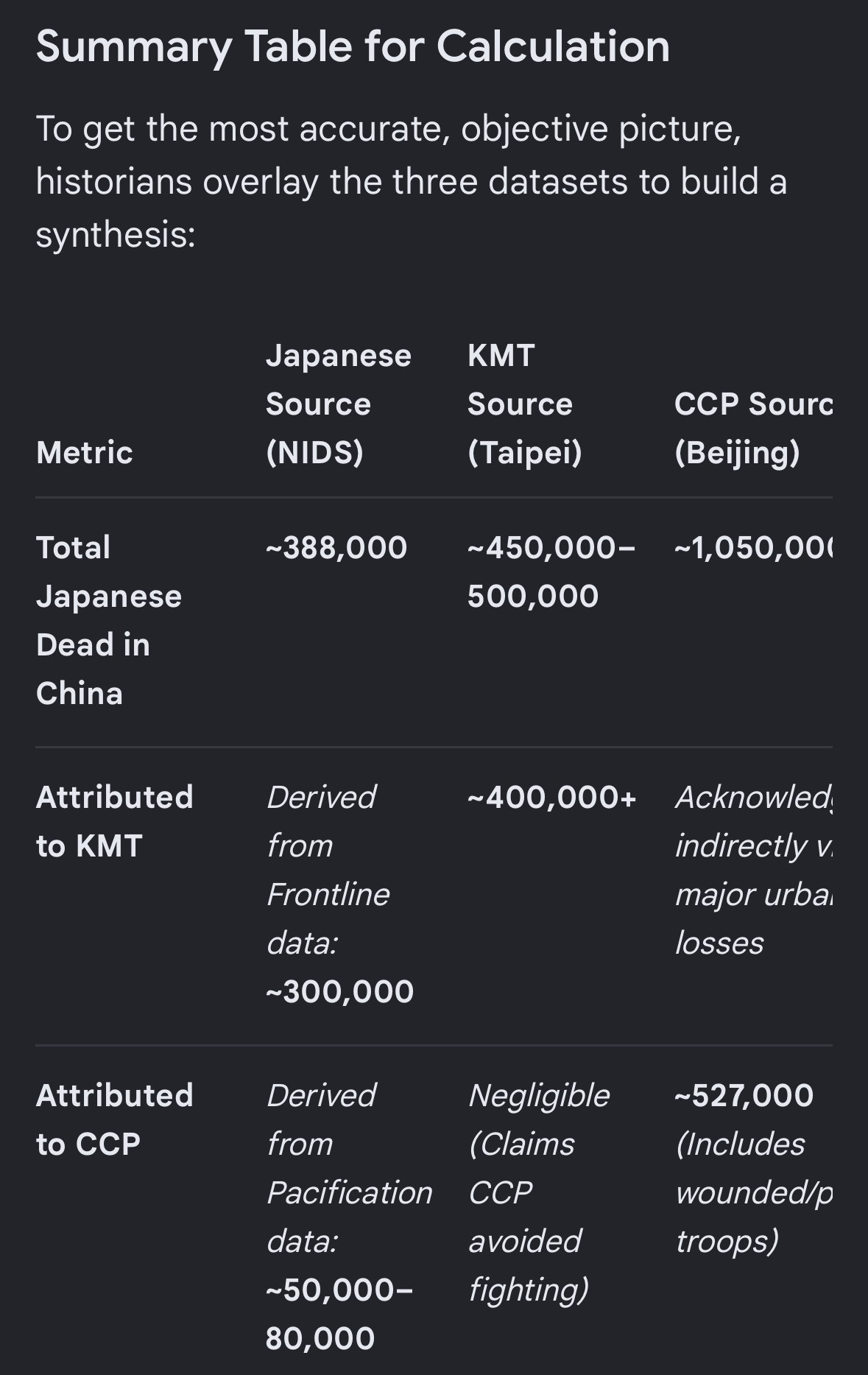
Summary Table for CalculationTo get the most accurate, objective picture, historians overlay the three datasets to build a synthesis:MetricJapanese Source (NIDS)KMT Source (Taipei)CCP Source (Beijing)Consensus ConsensusTotal Japanese Dead in China388,000450,000–500,0001,050,000400,000–450,000Attributed to KMTDerived from Frontline data:300,000400,000+Acknowledged indirectly via major urban losses300,000–350,000(Roughly 75-80%)Attributed to CCPDerived from Pacification data: 50,000–80,000Negligible (Claims CCP avoided fighting)527,000 (Includes wounded/puppet troops)50,000–80,000(Roughly 15-20%)
国军和共军当然有统计自己歼灭多少日军,但是日军根本不可能精确区分分别统计自己被国军和共军各自歼灭了多少。
中越战争时,中国也没有统计自己被越南正规军和游击队各自歼灭了多少。
日军的很多部队都是几乎同时和国军共军作战,根本无法精确区分统计自己的伤亡多少是被国军造成多少是共军造成。而且,国军也有大规模的敌后游击队。还有一些党派色彩不明显的敌后民众自发抗日武装。
DIYer 写了: 2026年 7月 20日 13:34我说了不需要精确统计,但是日军知道自己在跟国民党还是共产党打仗,死了多少人不是就有了吗?共产党这边更好统计,打的就是日军。
Summary Table for CalculationTo get the most accurate, objective picture, historians overlay the three datasets to build a synthesis:MetricJapanese Source (NIDS)KMT Source (Taipei)CCP Source (Beijing)Consensus ConsensusTotal Japanese Dead in China388,000450,000–500,0001,050,000400,000–450,000Attributed to KMTDerived from Frontline data:300,000400,000+Acknowledged indirectly via major urban losses300,000–350,000(Roughly 75-80%)Attributed to CCPDerived from Pacification data: 50,000–80,000Negligible (Claims CCP avoided fighting)527,000 (Includes wounded/puppet troops)50,000–80,000(Roughly 15-20%)
你这里是后代的历史学家,粗略划分了大约38万侵华日军的死亡,其中30万归因为国军,5-8万归因为共军。注意这是后世历史学家的结论,不是日军自己有这么区分过。日军说的就是自己在中国死了38万,根本没有区分其中多少是国军的战果多少是共军的战果。客观上,日军也很难做到这一点。
DIYer 写了: 2026年 7月 20日 13:34我说了不需要精确统计,但是日军知道自己在跟国民党还是共产党打仗,死了多少人不是就有了吗?共产党这边更好统计,打的就是日军。
Summary Table for CalculationTo get the most accurate, objective picture, historians overlay the three datasets to build a synthesis:MetricJapanese Source (NIDS)KMT Source (Taipei)CCP Source (Beijing)Consensus ConsensusTotal Japanese Dead in China388,000450,000–500,0001,050,000400,000–450,000Attributed to KMTDerived from Frontline data:300,000400,000+Acknowledged indirectly via major urban losses300,000–350,000(Roughly 75-80%)Attributed to CCPDerived from Pacification data: 50,000–80,000Negligible (Claims CCP avoided fighting)527,000 (Includes wounded/puppet troops)50,000–80,000(Roughly 15-20%)
mjridgway 写了: 2026年 7月 20日 13:48国军和共军当然有统计自己歼灭多少日军,但是日军根本不可能精确区分分别统计自己被国军和共军各自歼灭了多少。
中越战争时,中国也没有统计自己被越南正规军和游击队各自歼灭了多少。
日军的很多部队都是几乎同时和国军共军作战,根本无法精确区分统计自己的伤亡多少是被国军造成多少是共军造成。而且,国军也有大规模的敌后游击队。还有一些党派色彩不明显的敌后民众自发抗日武装。
游击队的不算都没问题,游击队打死那点日军跟大部队不在一个数量级。
我说了不用精确统计,你老说精确干嘛?日军有战役记录吧?那些战役对手是谁总知道吧?怎么就算不出来有多少是没共军歼灭的!


