
我估计他/她是中宣部学的,
白皮又做出0-1了,Moderna的癌症疫苗应该是对所有癌症都有效

#63 Re: 白皮又做出0-1了,Moderna的癌症疫苗应该是对所有癌症都有效
俺什么都不读,只是给钱给研究人员和公司,尤其是能源和医疗(重器械)
些想现在,美国AI也被大外宣收买了。。。丸辣,地球都被土共买通了吧
你辣妈列害,用AI打我脸啊。。。
懒得打字,觉得差不多,就让AI答 相信比我说的可信度告吧
再硕你辣妈列害,叙事逻辑不通啊,用AI冰不能证明俺什么都得,而是对于公开的信息,AI比个人全面,准去
你认为自己列害,可以用AI或者自己的硬知识打我的脸 批得体无完肤啊
谁别人不行(包括AI)并不能证明自己行,要证明自己行要么有证据,要么有道理。。。明白
是不?
不爽了,AI无用,错误,脑残救可以出炉了
僵菌的认知高啊,高极了,实在是高
上次由 redot 在 2026年 8月 20日 09:53 修改。

#67 Re: 白皮又做出0-1了,Moderna的癌症疫苗应该是对所有癌症都有效
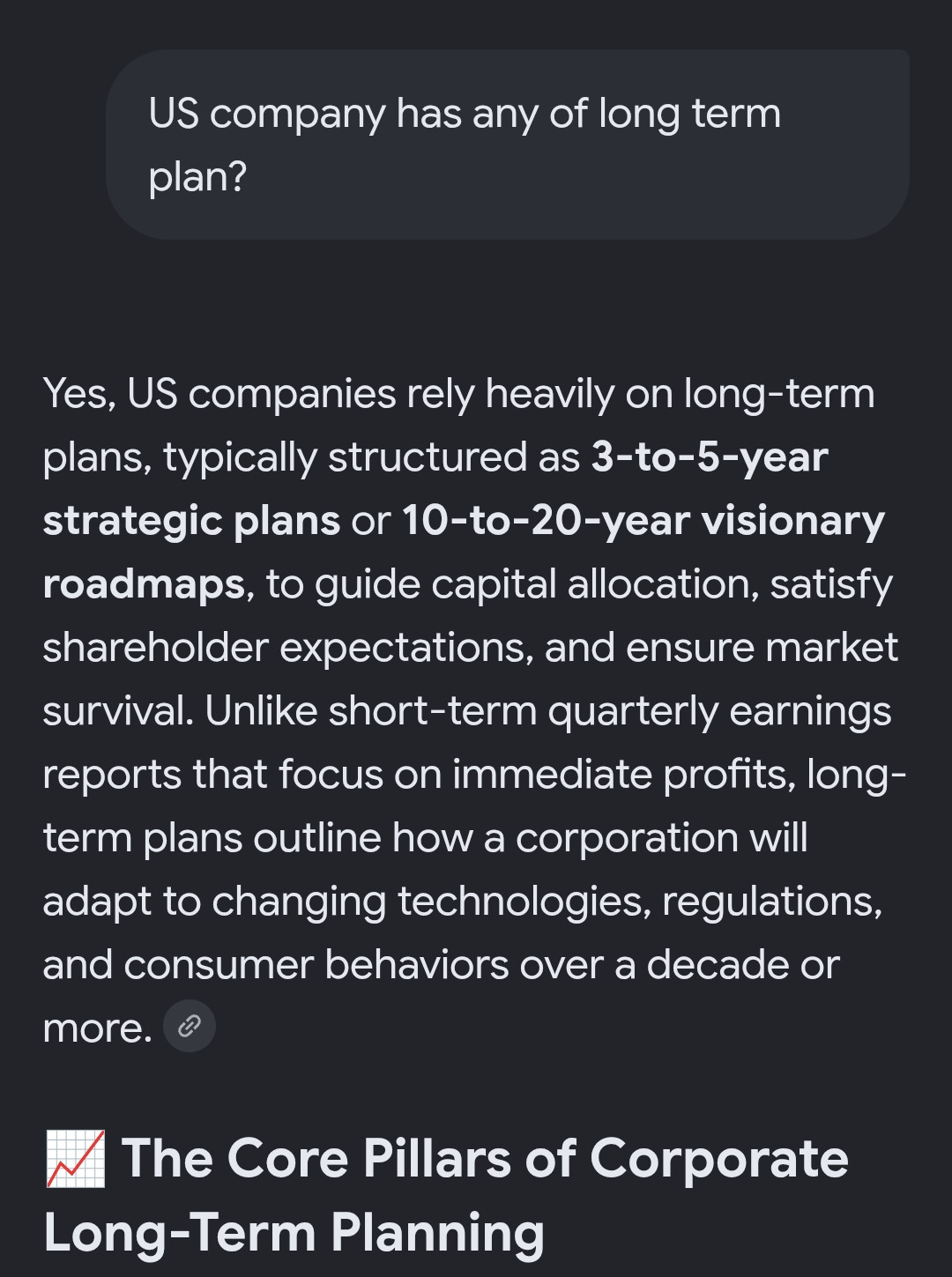
Yes, US companies rely heavily on long-term plans, typically structured as 3-to-5-year strategic plans or 10-to-20-year visionary roadmaps, to guide capital allocation, satisfy shareholder expectations, and ensure market survival. Unlike short-term quarterly earnings reports that focus on immediate profits, long-term plans outline how a corporation will adapt to changing technologies, regulations, and consumer behaviors over a decade or more. [1]
US companies design their long-term plans around four interconnected operational pillars:
- Strategic Roadmap: Defining corporate vision, long-term market positioning, and core values.
- Capital Allocation: Committing multi-year budgets for massive factories, infrastructure, or mergers.
- R&D Investments: Funding speculative innovation, product development, and technological pivots.
- Sustainability & Legacy: Ensuring long-term survival through resource efficiency and regulatory alignment. [2]
To balance immediate survival with future growth, corporations operate on three distinct time horizons:
| Horizon Type | Timeframe | Primary Focus | Corporate Examples |
|---|---|---|---|
| Tactical Execution | 1 to 2 Years | Cash flow, operational efficiency, immediate product cycles. | Inventory restructuring, local marketing campaigns. |
| Strategic Growth | 3 to 5 Years | Market expansion, core technology updates, business restructuring. | Building a new data center, upgrading enterprise software. |
| Visionary Shift | 10+ Years | Deep research, paradigm shifts, long-term demographic adaptations. | Transitioning to autonomous fleets, developing carbon-neutral supply chains. |
Long-term planning varies significantly depending on the capital intensity and development cycles of the specific industry:
 Technology & Innovation
 Technology & Innovation
Tech companies plan 5 to 10 years ahead due to the rapid pace of obsolescence. They invest aggressively in fundamental research before consumer applications even exist. For instance, major cloud providers laid the infrastructure and chip-acquisition blueprints for artificial intelligence years before consumer AI tools became mainstream.
 Manufacturing & Automotive
 Manufacturing & Automotive
Automotive and heavy machinery firms require 7 to 12 years of forward planning. Developing a new vehicle platform or building advanced gigafactories takes billions of dollars and years of environmental and logistical setup. Their long-term plans must anticipate fuel regulations and consumer shift trends a decade in advance.
 Pharmaceuticals & Biotech
 Pharmaceuticals & Biotech
The pharmaceutical sector has some of the longest planning horizons, spanning 10 to 15 years. This is dictated by the lengthy timeline required for drug discovery, clinical trials, and FDA approval processes. A company's long-term financial health depends on planning its pipeline before current drug patents expire.
 Energy & Utilities
 Energy & Utilities
Energy corporations plan across 20-to-30-year horizons. Building nuclear plants, offshore wind farms, or traditional refineries requires immense capital that takes decades to generate a return on investment (ROI). Their long-term strategies focus heavily on global energy transitions and regulatory compliance.
While essential, long-term corporate planning faces major systemic challenges:
- Quarterly Pressure: Wall Street demands short-term profits, which can tempt executives to cut long-term R&D to boost the current quarter's stock price. [3]
- Disruptive Innovation: A rigid 10-year plan can be instantly invalidated by a breakthrough competitor or a sudden technological shift.
- Macroeconomic Shocks: Unforeseen global events, sudden inflation, or geopolitical trade shifts can disrupt global supply chains and force companies to scrap multi-year blueprints.
If you are analyzing a specific organization, please tell me:
- The name of the US company or industry you are looking at
- The specific goal of your analysis (e.g., investing, job hunting, competitive research)
I can help pull their latest public strategic initiatives or sustainability roadmap.
[1] https://plnr.io
[2] https://perspectives.se.com
[3] https://emeritus.org
#69 Re: 白皮又做出0-1了,Moderna的癌症疫苗应该是对所有癌症都有效
redot 写了: 今天 09:56Yes, US companies rely heavily on long-term plans, typically structured as 3-to-5-year strategic plans or 10-to-20-year visionary roadmaps, to guide capital allocation, satisfy shareholder expectations, and ensure market survival. Unlike short-term quarterly earnings reports that focus on immediate profits, long-term plans outline how a corporation will adapt to changing technologies, regulations, and consumer behaviors over a decade or more. [1]
US companies design their long-term plans around four interconnected operational pillars:
- Strategic Roadmap: Defining corporate vision, long-term market positioning, and core values.
- Capital Allocation: Committing multi-year budgets for massive factories, infrastructure, or mergers.
- R&D Investments: Funding speculative innovation, product development, and technological pivots.
- Sustainability & Legacy: Ensuring long-term survival through resource efficiency and regulatory alignment. [2]
To balance immediate survival with future growth, corporations operate on three distinct time horizons:
Horizon Type Timeframe Primary Focus Corporate Examples Tactical Execution 1 to 2 Years Cash flow, operational efficiency, immediate product cycles. Inventory restructuring, local marketing campaigns. Strategic Growth 3 to 5 Years Market expansion, core technology updates, business restructuring. Building a new data center, upgrading enterprise software. Visionary Shift 10+ Years Deep research, paradigm shifts, long-term demographic adaptations. Transitioning to autonomous fleets, developing carbon-neutral supply chains.
Long-term planning varies significantly depending on the capital intensity and development cycles of the specific industry:
Tech companies plan 5 to 10 years ahead due to the rapid pace of obsolescence. They invest aggressively in fundamental research before consumer applications even exist. For instance, major cloud providers laid the infrastructure and chip-acquisition blueprints for artificial intelligence years before consumer AI tools became mainstream.
Automotive and heavy machinery firms require 7 to 12 years of forward planning. Developing a new vehicle platform or building advanced gigafactories takes billions of dollars and years of environmental and logistical setup. Their long-term plans must anticipate fuel regulations and consumer shift trends a decade in advance.
The pharmaceutical sector has some of the longest planning horizons, spanning 10 to 15 years. This is dictated by the lengthy timeline required for drug discovery, clinical trials, and FDA approval processes. A company's long-term financial health depends on planning its pipeline before current drug patents expire.
Energy corporations plan across 20-to-30-year horizons. Building nuclear plants, offshore wind farms, or traditional refineries requires immense capital that takes decades to generate a return on investment (ROI). Their long-term strategies focus heavily on global energy transitions and regulatory compliance.
While essential, long-term corporate planning faces major systemic challenges:
- Quarterly Pressure: Wall Street demands short-term profits, which can tempt executives to cut long-term R&D to boost the current quarter's stock price. [3]
- Disruptive Innovation: A rigid 10-year plan can be instantly invalidated by a breakthrough competitor or a sudden technological shift.
- Macroeconomic Shocks: Unforeseen global events, sudden inflation, or geopolitical trade shifts can disrupt global supply chains and force companies to scrap multi-year blueprints.
If you are analyzing a specific organization, please tell me:
- The name of the US company or industry you are looking at
- The specific goal of your analysis (e.g., investing, job hunting, competitive research)
I can help pull their latest public strategic initiatives or sustainability roadmap.
[1] https://plnr.io
[2] https://perspectives.se.com
[3] https://emeritus.org
再问一遍。你丫的拿着董事会批准的capex找财务要钱人家给你个法克吗?计划你根逼毛。狗屁不懂的辣鸡……
Sell your kidney if you have to, but keep your Soxl 
-
geniushanbiao
- 等级14:论坛支柱
- 帖子互动: 2610
- 帖子: 16148
- 注册时间: 2023年 11月 21日 09:28
#70 Re: 白皮又做出0-1了,Moderna的癌症疫苗应该是对所有癌症都有效
https://www.nature.com/articles/s41589-025-02074-0
不是,这文章的两个作者的名字,老夫没看出任何白皮的痕迹啊。
-
CanGuanGong(职业调教小粉红;哥别名李丹乃李洪志他爹)

- 等级13:论坛精英
CanGuanGong 的博客 - 帖子互动: 502
- 帖子: 9248
- 注册时间: 2022年 7月 23日 18:05
#71 Re: 白皮又做出0-1了,Moderna的癌症疫苗应该是对所有癌症都有效
redot 写了: 今天 09:29俺什么都不读,只是给钱给研究人员和公司,尤其是能源和医疗(重器械)
些想现在,美国AI也被大外宣收买了。。。丸辣,地球都被土共买通了吧
你辣妈列害,用AI打我脸啊。。。
懒得打字,觉得差不多,就让AI答 相信比我说的可信度告吧再硕你辣妈列害,叙事逻辑不通啊,用AI冰不能证明俺什么都得,而是对于公开的信息,AI比个人全面,准去
你认为自己列害,可以用AI或者自己的硬知识打我的脸 批得体无完肤啊
谁别人不行(包括AI)并不能证明自己行,要证明自己行要么有证据,要么有道理。。。明白
是不?不爽了,AI无用,错误,脑残救可以出炉了
僵菌的认知高啊,高极了,实在是高
别舔着逼脸吹牛逼了。中国一个穷逼国,有个鸡巴钱。那点小钱在第三世界吹牛逼可以,在美帝面前,屁都不是。
